

Running a Player Clan: Leadership in Online Communities
We still remember our first clan invite. It arrived as a single line of green text in a busy in-game channel, somewhere between a goblin hunt and a frantic attempt to remember which alias healed us. Joining a clan in a text-based RPG felt like being handed keys to a secret clubhouse, and running one, as we later discovered, is one of gaming’s most underrated challenges. There is no matchmaking algorithm to lean on, no automated guild bank, and no voice chat to read the room. Just words, trust, and a group of real people scattered across time zones who have chosen to build something together inside a world made of sentences.
Why Player Clans Still Matter in MUD Games
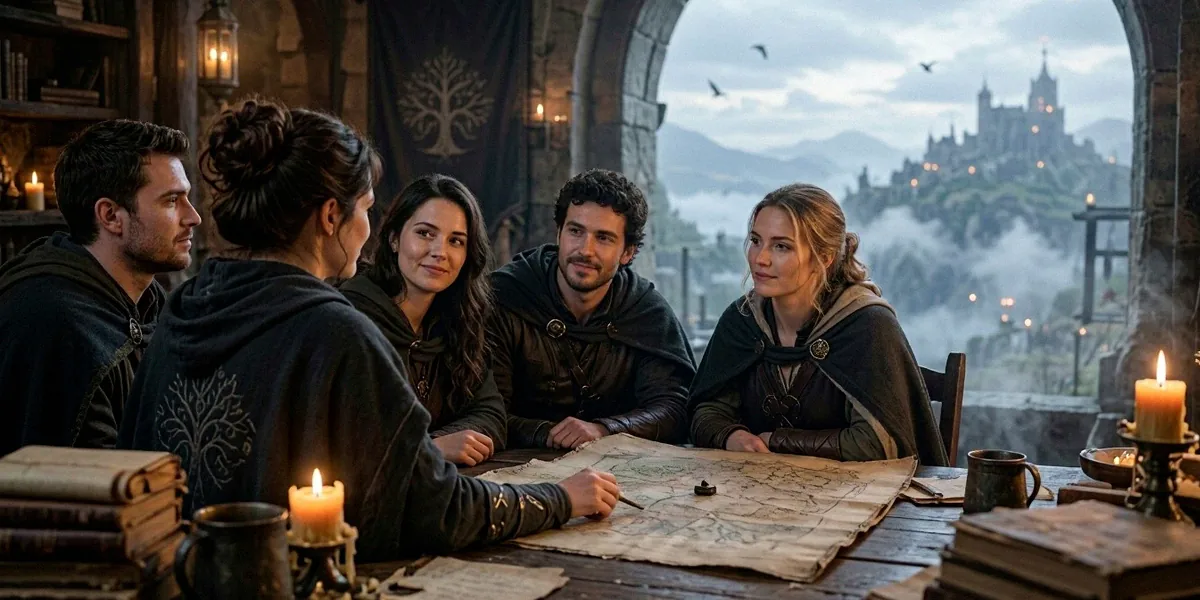
Clans are the reason many of us log in on a Tuesday night in November when the rain is hammering the windows. In MUD games, where graphics never carry the experience, the people do. A clan gives a new player a reason to return after their first death, and gives a veteran a reason to keep logging in long after they have maxed every skill. Retention in text-based RPGs is rarely about content patches. It is about belonging.
Discworld MUD is a long-running UK-based MUD with an active clan scene, and it is a perfect illustration. Players organise themselves around shared goals, rivalries and in-jokes that have accumulated over years. Avalon: The Legend Lives, a classic British text-based RPG with player-run guilds, shows the same principle in a more formalised way: when players own the institutions, they invest in them emotionally.
The Social Glue of Text-Based RPGs
Without clans, most MUDs would be a lonely prompt and a wall of room descriptions. Clans create the small rituals that hold a community together: the greeting macro, the shared bank, the officer who always seems to be online at 2am. These rituals are the social glue, and they cost nothing to build except attention.
Clans vs. Guilds: What’s the Difference?
The terminology varies between games, and it is worth being precise when you recruit.
- Guilds are often tied to a class, profession or deity, and may be coded into the game’s skill system.
- Clans are usually player-run social and competitive organisations, with their own ranks, rules and diplomacy.
- Alliances are groupings of clans, common in Aardwolf and Iron Realms, popular MUD games with clan and alliance systems.
In practice, a player might belong to a guild for mechanical benefits and a clan for everything that actually keeps them logging in.
Recruiting and Onboarding New Members
Recruitment in Telnet gaming is a slow craft. You cannot buy advertising inside a MUD, and spamming channels will earn you a reputation faster than it earns you members. The best recruits come from people who have already seen your clan in action.
Where to Find Committed Players
We look in three places, in roughly this order:
- In-game public channels and newbie areas, where enthusiasm is high and expectations are low.
- Telnet gaming forums and dedicated MUD subreddits, where returning players announce themselves.
- UK retro online games communities on Discord, where word of mouth travels quickly.
Telnet gaming remains the primary access method for many retro online games, which means your recruitment pitch has to work in plain text. No screenshots, no trailers. Just a clear description of what your clan does and when it meets.
Designing a Trial and Mentorship System
A trial period protects both sides. We usually run two to four weeks, with a named mentor assigned on day one. The mentor answers questions, drags the recruit along on hunts, and reports back to the officers. Trials should end with a conversation, not a silent promotion or a silent rejection. People remember how you treated them when they were new, and they tell other players.
Communication, Culture, and Conflict
A clan lives or dies on its communication. In a text-based RPG, tone is everything and nuance is easily lost, so we set expectations early and repeat them often.
Tools We Use: Discord, Forums, and In-Game Channels
Discord has become the default out-of-game hub, and it works well for scheduling and casual chat. In-game tells and clan channels remain essential for anything time-sensitive. Forums still matter for long-form discussion, recruitment threads and record-keeping. Our rule of thumb: quick decisions in-game, everything else on Discord, anything permanent on the forum.
Mediating Disputes Without Losing Members
Drama in interactive fiction communities is inevitable, because the stakes feel real. Our approach is boring but effective:
- Take disputes out of public channels immediately.
- Hear both sides separately before saying anything.
- Apply the code of conduct consistently, even when the person involved is a friend.
- Accept that some members will leave, and let them go gracefully.
A published code of conduct saves more arguments than any amount of charisma.
Organising Events and Raids in Text-Based RPGs
Events are what turn a roster into a community. Clan hunts, roleplay nights and PvP tournaments all work in MUD games, but they need scheduling discipline.
Planning Around UK Time Zones
UK players often organise clan events around GMT evenings and weekends, and we plan around that default. A 20:00 GMT start catches most of the UK and Ireland, plus early-evening players in mainland Europe. For North American members, weekend afternoon slots work better. We rotate the schedule monthly so nobody is permanently locked out of the fun.
Rewards, Rivalries, and Keeping Momentum
Small rewards go a long way: a title, a piece of clan kit, a mention in the clan log. Friendly rivalries with other clans, arranged in advance, give events a narrative edge. The key is momentum. A clan that runs one event a fortnight will always beat a clan that runs a spectacular event once a year.
Diplomacy, Alliances, and Server Politics
Once your clan has a reputation, politics arrives whether you invited it or not. Inter-clan diplomacy in MUD games ranges from simple non-aggression pacts to full alliance wars, and it rewards patience over aggression.
Building Alliances That Last
Good alliances are built on shared interests, not shared enemies. We look for clans with complementary play styles and overlapping event times, and we start with small, low-stakes cooperation: a joint hunt, a shared raid, a mutual defence agreement. Aardwolf and Iron Realms both offer rich alliance systems that reward this kind of long-term thinking.
When to Declare War (and When Not To)
Declare war when you have a clear objective, a realistic plan and members who actually want to fight. Do not declare war to settle a personal grudge, to prove a point on a forum, or because a rival clan goaded you into it. Wars are expensive in time and morale, and the clans that last are the ones that pick their battles.
Avoiding Burnout as a Clan Leader
Every long-running clan we know has survived at least one leader stepping down. The ones that collapsed are the ones where the leader tried to do everything forever.
Sharing the Load: Officers and Advisors
We recommend distinct roles: a recruitment officer, an events officer, a diplomacy contact and at least one advisor with no formal duties who can be trusted to give honest feedback. Rotate the boring jobs. Recognise the people doing them.
Knowing When to Hand Over the Reins
Step back when you notice yourself logging in out of obligation rather than enjoyment. Plan a succession before you need one, train your replacement during a quiet period, and stay on as an advisor if the clan still means something to you. UK retro online games organisers who have run clans for decades almost all tell the same story: the leaders who lasted were the ones who shared power early.
FAQ
What is a clan in a MUD game?
A clan is a player-run organisation inside a MUD, usually with its own ranks, rules, chat channel and shared goals. Clans are distinct from guilds, which are often tied to character classes or in-game mechanics.
Do I need Discord to run a clan?
No, but it helps enormously. Most modern clans use Discord for scheduling and casual chat, while keeping in-game tells and channels for anything time-sensitive. Telnet gaming remains the primary access method for many retro online games, so in-game communication should always work on its own.
How many members does a clan need to be viable?
We have seen clans thrive with a dozen active members and struggle with a hundred inactive ones. What matters is how many people show up on a typical evening, not the size of the roster.
How do we handle a member who breaks the code of conduct?
Follow your published process: private conversation first, then a formal warning, then removal if the behaviour continues. Consistency matters more than severity, and other members are watching how you handle it.
When is the best time to run clan events for UK players?
Weekday evenings from around 20:00 GMT and weekend afternoons tend to work best. Rotating slots monthly keeps North American and European members involved without exhausting your officers.
Great clan leadership in MUD games is not really about winning battles, though the victories are fun. It is about building a community that outlasts any single member, including you. Get the recruitment, communication and diplomacy right, look after your own energy, and your clan will still be trading tells on a rainy Tuesday night long after the servers you started on have changed hands.